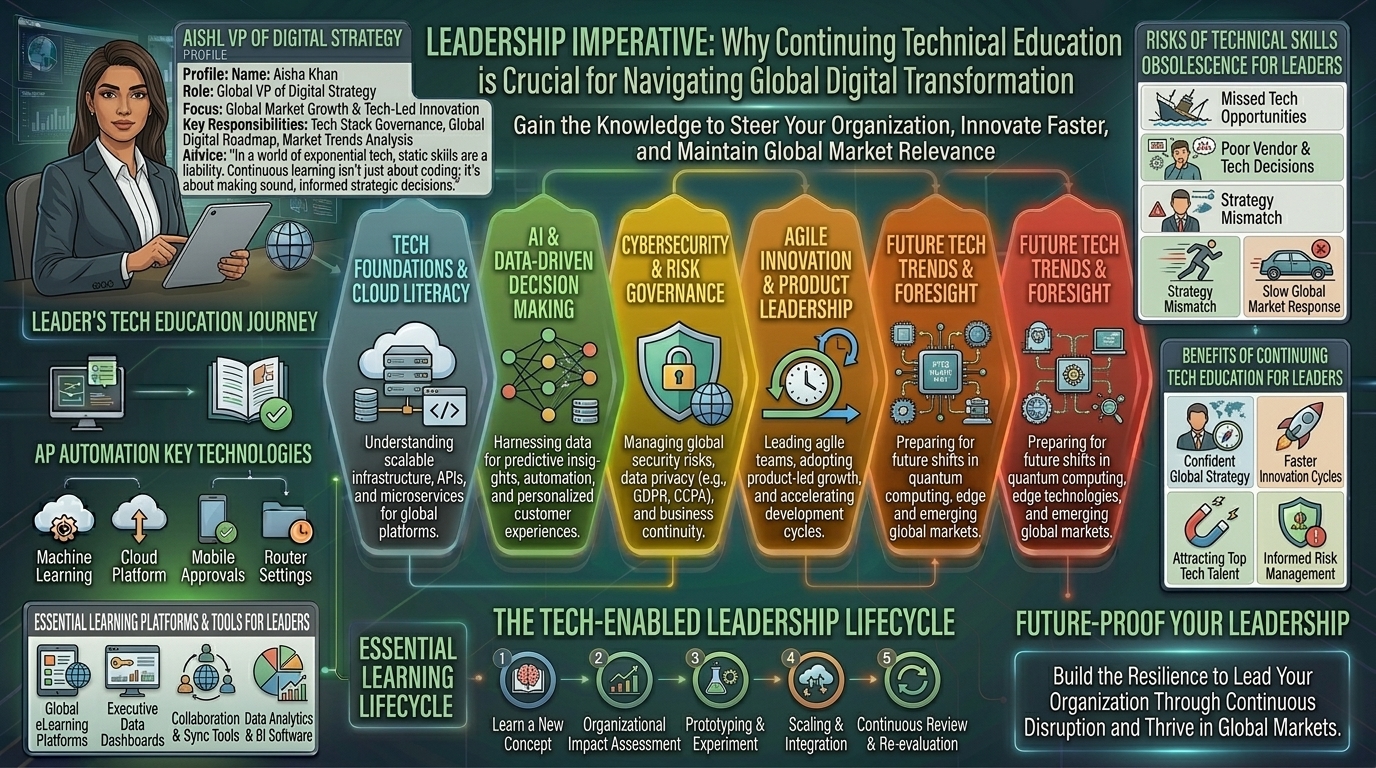
For chief executive officers, corporate board directors, venture partners, and enterprise division leaders navigating international commerce across major economic engines—from the deep-tech incubators of San Francisco and the broader California innovation corridor, to the institutional finance powerhouses of New York, the federal and regulatory policy hubs of Washington, and the massive enterprise and logistics networks of Texas—a quiet crisis is unfolding in the executive suite.
For decades, traditional corporate leadership followed a predictable playbook: master business administration, optimize operational efficiency, delegate technical execution to the engineering department, and focus strictly on high-level strategy and capital allocation.
In the era of rapid digital transformation, cloud ecosystems, artificial intelligence acceleration, and cyber threats, that playbook is obsolete.
When business leaders treat technology as a black box managed exclusively by tech teams, catastrophic strategic missteps occur. Executives approve multi-million-dollar digital transformation initiatives they do not understand, miscalculate cybersecurity risks, fail to identify disruptive industry shifts, and lose competitive advantage to digitally fluent rivals.
To thrive in global markets, continuing technical education is no longer an optional hobby for junior developers—it is an absolute strategic imperative for executive leadership. This comprehensive guide explores why modern business leaders must commit to ongoing technical literacy, the critical technology domains shaping global markets, and how continuous learning drives resilient enterprise growth.
1. Demystifying the Executive Technical Gap
Before examining strategic integration frameworks, leaders must recognize how rapidly technology outpaces traditional business education:
+-------------------------------------------------------------------------+
|                THE EXECUTIVE KNOWLEDGE GAP DYNAMICS                     |
+---------------------+---------------------+-----------------------------+
| 1. THE SPEED OF IT  | 2. THE STRATEGIC RISK| 3. THE COMMUNICATION CHASM |
| • Moore's Law and   | • Approving flawed   | • Inability to translate   |
|   exponential leaps |   digital initiatives|   business goals into       |
|   in AI & cloud     |   due to ignorance   |   technical execution       |
+---------------------+---------------------+-----------------------------+
A. The Acceleration of Technological Change
Technology cycles have compressed dramatically. Where previous industrial shifts spanned decades, modern innovations—such as generative artificial intelligence, zero-trust cybersecurity architectures, serverless cloud models, and distributed ledger systems—redefine global markets in months. Leaders who rely on 10-year-old degrees or static business intuition find themselves making strategic decisions based on outdated assumptions.
B. The Danger of Delegating Understanding
While executives can and should delegate day-to-day execution to technical specialists, they cannot delegate strategic comprehension. If a CEO cannot evaluate the architectural viability, security implications, or long-term scalability of a digital transformation roadmap proposed by their CTO, they are essentially flying blind while spending shareholder capital.
2. Core Technological Domains Every Modern Leader Must Understand
To govern effectively across global markets, business leaders must master foundational concepts across four primary technology pillars:
A. Artificial Intelligence and Machine Learning Fundamentals
Leaders do not need to write Python algorithms, but they must understand the operational mechanics, data dependencies, and risk profiles of AI. An executive must know how to distinguish between deterministic software and probabilistic machine learning models, evaluate AI ROI, and anticipate data privacy or algorithmic bias liabilities.
B. Cybersecurity and Risk Governance
Cybersecurity is no longer an IT operational issue; it is a board-level existential risk. Leaders must understand zero-trust architecture, the mechanics of spear-phishing, supply chain vulnerabilities, and regulatory compliance frameworks (such as NIST and state privacy acts) to protect corporate assets.
C. Cloud Infrastructure and Economics
Understanding cloud scalability, serverless architectures, multi-cloud redundancy, and unit economics is vital for controlling burn rates and ensuring digital resilience against outages or traffic surges.
D. Data Architecture and Privacy Regulations
Data is the currency of global markets. Leaders must grasp how data flows through their organization, how customer data is governed, and how international privacy laws (GDPR, CCPA) impact global product scaling.
3. Regional Perspectives: Technical Leadership Across U.S. Markets
Executive educational priorities often reflect the specific economic and industrial profiles of their geographic operating environment:
San Francisco & Silicon Valley: AI Acceleration and Product Velocity
Bay Area leaders operate in a hyper-competitive ecosystem where technological agility is survival. Executives here must continuously upskill in AI integration, agile product lifecycles, and venture-scale engineering economics to retain market leadership.
New York: Fintech, Compliance, and Enterprise Security
New York executives managing institutional finance, legal, and media enterprises must balance aggressive digital innovation with rigid regulatory compliance (NYDFS, SEC), requiring continuous education in secure ledger systems and financial technology frameworks.
Texas: Energy Tech, Industrial IoT, and Supply Chain Automation
Texas business leaders directing energy, logistics, and manufacturing sectors focus heavily on industrial automation, IoT telemetry, and operational technology (OT) cybersecurity to safeguard critical infrastructure across sprawling supply chains.
California (Southern California & Digital Media): E-Commerce and Digital Rights Management
SoCal media and retail executives prioritize continuous education in digital distribution architectures, consumer privacy compliance, and scalable e-commerce infrastructure.
Washington: Federal Compliance, Cloud Architecture, and GovTech
Washington-based leaders engaging with federal contractors and public sector tech must master complex government compliance standards (CMMC, FedRAMP) and secure cloud deployment models.
4. Step-by-Step Framework: Implementing Executive Technical Education
Integrating continuing technical education into a demanding C-suite schedule requires a structured, intentional framework:
[ Step 1: Assess Tech Blind Spots ] ---> [ Step 2: Curate Executive Micro-Learning ] ---> [ Step 3: Peer Tech Roundtables ] ---> [ Step 4: Apply to Strategic Governance ]
Step 1: Conduct a Personal Technology Audit
Frankly evaluate your current understanding of your company’s core technology stack. Identify specific blind spots—whether you struggle to understand cloud cost structures, data governance rules, or AI implementation risks.
Step 2: Adopt Executive-Level Micro-Learning
Avoid dense coding bootcamps meant for junior developers. Instead, curate high-level executive education programs, MIT/Stanford executive tech courses, specialized briefings, and deep-dive literature focused on the strategic impact of emerging technologies.
Step 3: Establish Reverse-Mentoring and Technical Roundtables
Pair yourself with a senior internal engineer or technical advisor for monthly “reverse-mentoring” sessions. Ask unvarnished questions about your company’s technical architecture, infrastructure bottlenecks, and security posture.
Step 4: Integrate Technical Literacy into Board and Strategy Meetings
Actively incorporate technical risk assessments and digital transformation milestones into regular board meetings and executive reviews, turning learned concepts into actionable governance policies.
5. Five Pro Tips for Busy Leaders to Maintain Continuous Technical Learning
- Leverage Curated Audio and Executive Briefings: Transform commute or travel time into learning intervals by subscribing to high-caliber tech-strategy podcasts, executive newsletters, and audio summaries of emerging research papers.
- Focus on “First Principles” Over Syntax: Do not waste executive time memorizing programming languages or technical syntax. Focus on first principles: input-output mechanics, scalability bottlenecks, security perimeters, and economic trade-offs.
- Participate in Immersive Innovation Workshops: Attend hands-on technology workshops or innovation labs where you can witness emerging tools (such as live generative AI prototyping or cloud deployment simulations) in action.
- Build a Diverse Advisory Network: Surround yourself with advisors, board members, and technical consultants who challenge your assumptions and provide objective insights into technological shifts.
- Tie Learning Directly to Business Objectives: Never study technology in a vacuum. Whenever you learn a new technical concept (e.g., serverless scaling or zero-trust security), immediately ask: How does this apply to our Q3 product roadmap or risk mitigation strategy?
10 Frequently Asked Questions (FAQ)
1. Why do business leaders need technical education if they have a CTO and IT team?
While technical teams handle execution, leaders must possess strategic technical literacy to evaluate proposals, allocate capital wisely, assess cybersecurity risks, and align digital strategy with overall business objectives.
2. Does continuous technical education mean business leaders need to learn how to code?
No. Executive technical education focuses on architectural concepts, strategic implications, risk management, and technological trends, not writing code or managing syntax.
3. What are the most critical technologies business leaders must understand today?
Key domains include artificial intelligence and machine learning applications, zero-trust cybersecurity governance, cloud infrastructure economics, and data privacy compliance frameworks.
4. How can busy executives find time for continuous technical learning?
Executives can integrate learning into their routines by utilizing micro-learning modules, listening to strategic tech podcasts during travel, participating in executive roundtables, and engaging in reverse-mentoring with internal tech leads.
5. How does technological illiteracy harm a company’s market competitiveness?
Leaders who do not understand technology frequently misallocate capital into outdated systems, fail to spot disruptive market innovations, underestimate cybersecurity threats, and lose talent to more digitally fluent competitors.
6. What is “reverse-mentoring” and how does it help executive leaders?
Reverse-mentoring pairs a senior executive with a junior technical specialist or engineer, allowing the leader to ask foundational questions about company technology and industry trends in a collaborative setting.
7. How has digital transformation changed the role of the modern CEO?
Digital transformation has shifted the CEO role from managing physical assets and static hierarchies to orchestrating agile, software-driven enterprises where technology underpins every revenue stream and customer interaction.
8. What role does cybersecurity governance play in executive education?
Because cyber threats represent existential business risks, executives must understand security frameworks to ensure their organizations maintain compliance, protect client data, and prevent catastrophic operational downtime.
9. Are there specialized executive programs focused on business technology?
Yes. Major universities (such as MIT, Stanford, Harvard, and Wharton) offer specialized executive education programs designed specifically to teach business leaders how to navigate AI, digital transformation, and tech strategy.
10. How can a leader measure the ROI of their own technical education?
The ROI is measured through better strategic decision-making, reduced digital project failure rates, improved alignment between business and engineering teams, smarter technology budgeting, and enhanced competitive positioning.
Conclusion: Leading the Future with Digital Fluency
For executives, founders, and corporate leaders operating across San Francisco, New York, Texas, Washington, California, and global markets worldwide, the boundary between business strategy and technology has vanished. Operating a modern enterprise without technical literacy is like navigating international waters without a compass.
Leave a Reply