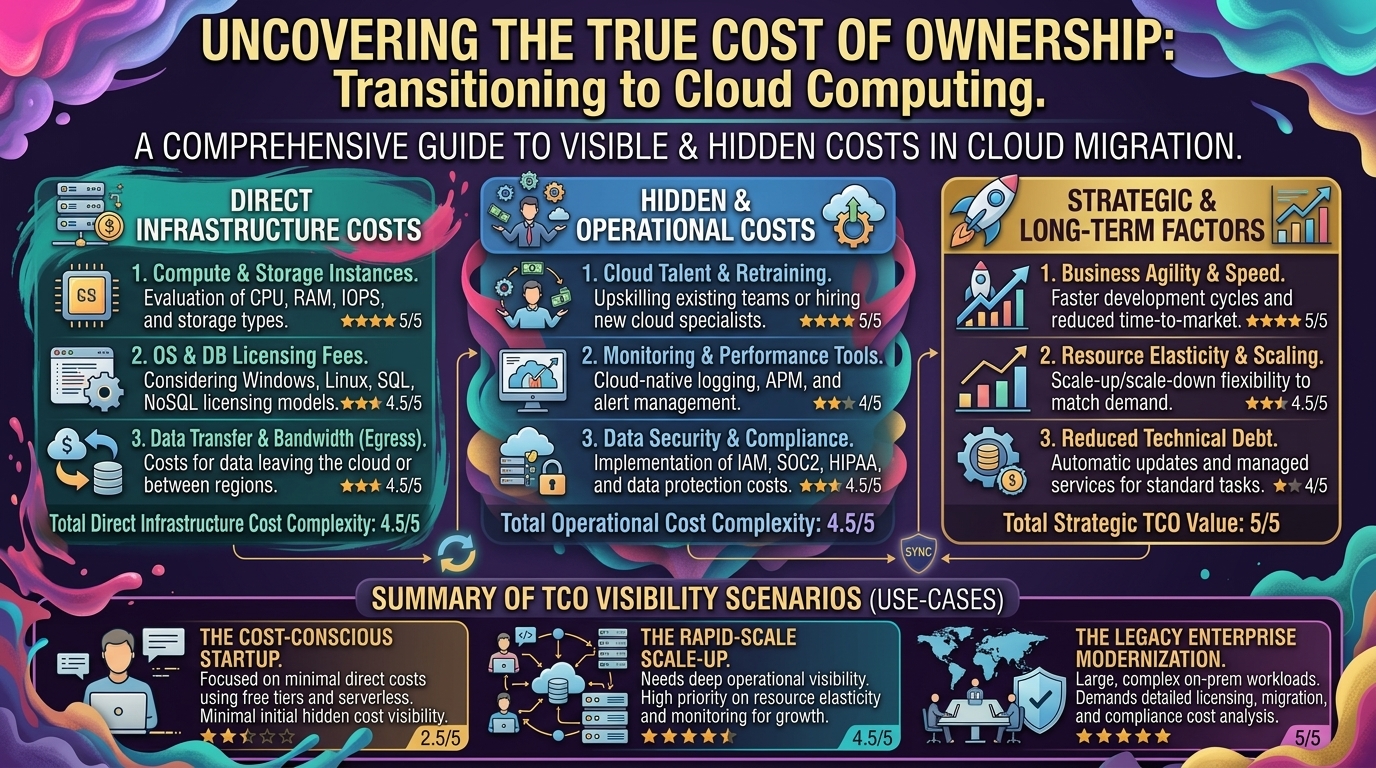
For modern enterprises, the question is no longer if they should migrate to the cloud, but how and at what financial velocity. Whether you are scaling an agile tech startup across the competitive hubs of San Francisco and Silicon Valley, managing enterprise finance systems in New York, coordinating logistics across Seattle (Washington), anchoring regional data centers in Austin (Texas), or expanding consumer applications in Los Angeles (California), transitioning to cloud computing is often marketed as an instant path to cost reduction.
C-suite executives are frequently lured by the promise of abandoning expensive physical server racks, eliminating on-premise maintenance overhead, and swapping rigid capital expenditures (CapEx) for flexible operational expenditures (OpEx). However, reality often tells a different story. Many organizations complete a cloud migration only to find their monthly utility bills from providers like AWS, Microsoft Azure, or Google Cloud Platform (GCP) exceeding their legacy data center costs.
The culprit is rarely the cloud itself; rather, it is a superficial understanding of Total Cost of Ownership (TCO). Evaluating the true cost of cloud migration requires looking past surface-level pricing calculators and examining the hidden friction points, architectural adjustments, and long-term operational shifts.
At rauz.ne, we believe that financial clarity is the backbone of scalable enterprise growth. This comprehensive, exhaustive guide explores how to accurately evaluate the true cost of ownership when transitioning your business infrastructure to the cloud.
Part 1: Deconstructing TCO — On-Premises vs. Cloud Architecture
To evaluate the financial impact of a cloud migration, you must first establish a complete framework that captures both tangible and intangible expenses across a multi-year lifecycle (typically a 3-to-5-year projection model).
+-------------------------------------------------------------------------------------------------+
|                       TOTAL COST OF OWNERSHIP (TCO) COMPARISON MATRIX                           |
+-------------------------------------------------------------------------------------------------+
| Cost Category       | On-Premises Infrastructure            | Cloud Computing Environment       |
+---------------------+---------------------------------------+---------------------------------+
| Capital Outlay      | High (Servers, switches, real estate) | Minimal (Subscription/Usage-based)|
| Scaling Cost        | Lumpy, expensive hardware refreshes   | Instantaneous, granular scaling |
| Personnel Overhead  | High (Physical rack/stack engineers)  | Moderate (Cloud architects/DevOps)|
| Maintenance & Power | Continuous utility & cooling overhead | Abstracted into CSP pricing     |
| Data Movement       | Internal network overhead             | Subject to data egress fees     |
+-------------------------------------------------------------------------------------------------+
1. On-Premises TCO Anatomy
Traditional infrastructure is front-loaded with massive Capital Expenditures (CapEx):
- Hardware Procurement: Physical servers, enterprise-grade storage arrays, routers, firewalls, and redundant power supplies.
- Facilities & Environmental Overhead: Dedicated server room space, commercial real estate leases, industrial HVAC cooling units, and physical security systems.
- Depreciation Schedules: Hardware losing value over a 3-to-5-year amortization cycle, culminating in costly forklift upgrades.
2. Cloud TCO Anatomy
Cloud infrastructure shifts the financial model almost entirely to Operational Expenditures (OpEx):
- Compute and Storage Consumption: Pay-as-you-go billing based on vCPUs, RAM allocation, NVMe input/output operations, and gigabytes stored.
- Managed Services Overhead: Premium fees for fully managed Kubernetes clusters, serverless databases, automated backups, and advanced security firewalls.
Part 2: The Hidden and Overlooked Costs of Cloud Migration
While cloud billing dashboards are transparent down to the second, predicting how your architecture will behave under real-world commercial workloads reveals expenses that rarely appear in initial sales estimates.
1. Data Egress and Network Transfer Fees
Getting your data into public cloud providers is typically free or heavily subsidized. Getting your data out is where cloud providers generate massive margins.
- The Hidden Trap: If your application frequently transfers data across different availability zones, regions, or out to external clients (such as video streaming, heavy API data feeds, or multi-cloud backups), data egress fees can easily account for 20% to 30% of your monthly cloud bill.
2. Application Rearchitecturing and Refactoring Debt
Simply “lifting and shifting” an old monolithic on-premise application directly onto a cloud virtual machine (IaaS) is a recipe for financial inefficiency.
- The Hidden Trap: Legacy apps are rarely built to scale elastically. Running an unoptimized monolith in the cloud means provisioning massive, always-on virtual instances that mimic your old physical hardware, defeating the cost-saving elasticity of the cloud. Proper modernization requires refactoring applications into microservices, containerizing via Docker, and utilizing serverless functions—demanding hundreds of hours of high-priced software engineering labor.
3. Over-Provisioning and Idle Resource Waste
One of the greatest ironies of cloud computing is that its flexibility breeds waste. Because spinning up a new 64-core virtual server takes seconds, developers routinely provision massive resources for testing, staging, and development environments—and forget to shut them down.
- The Impact: Unmonitored sandbox environments, unattached block storage volumes, abandoned database snapshots, and oversized production instances run 24/7/365, bleeding capital silently.
Part 3: The Human Element — Personnel and Training Costs
A common misconception is that moving to the cloud reduces IT staffing requirements because you no longer need physical engineers to replace blown power supplies or dead hard drives.
+-----------------------------------------------------------------------+
|                       THE CLOUD STAFFING SHIFT                        |
+-----------------------------------------------------------------------+
| Legacy IT  --> Focuses on hardware maintenance, physical wiring       |
| Cloud Ops  --> Focuses on FinOps, architecture security, automation   |
+-----------------------------------------------------------------------+
1. The Skill Gap and Certification Costs
Managing cloud-native environments requires specialized skill sets. Your legacy IT staff will require extensive upskilling, official certifications (AWS Solutions Architect, Azure DevOps Engineer, GCP Professional Cloud Architect), and continuous training.
2. The Birth of FinOps (Financial Operations)
In a modern cloud-first enterprise, controlling costs requires dedicated personnel. Organizations must implement a FinOps practice—cross-functional teams consisting of finance and engineering working together to monitor, allocate, and optimize cloud spend continuously. If left unchecked, cloud architecture expands organically, driving up TCO far beyond initial forecasts.
Part 4: Step-by-Step Framework to Calculate Accurate Cloud TCO
To build a bulletproof financial model for migrating your business infrastructure to the cloud, follow this actionable 5-step calculation framework:
- Perform a Comprehensive Workload Discovery: Audit every existing application, database, file repository, and network connection. Categorize workloads by utilization patterns (steady-state vs. highly variable seasonal traffic spikes).
- Calculate Migration and Professional Services Expense: Tally the labor hours, third-party consulting fees, and potential downtime losses incurred during the actual data transition phase.
- Model Steady-State vs. Elastic Consumption: Map out your projected compute and storage requirements. Factor in volume discounts, enterprise discount programs (EDPs), 1-to-3-year Reserved Instances, and Savings Plans offered by cloud vendors.
- Project Network and Egress Overhead: Estimate internal and external data transfer volumes to account for inter-region traffic and data extraction penalties.
- Establish Governance and Guardrails: Implement automated cost-monitoring tools (such as AWS Cost Explorer, Datadog, or Kubecost) from day one to enforce budget alerts and auto-shutdown policies for non-production environments.
Part 10 Comprehensive FAQs
1. Is cloud computing always cheaper than maintaining an on-premises data center?
No. For predictable, steady-state, 24/7 workloads with high, consistent utilization, running dedicated on-premise hardware or co-located servers can occasionally be more cost-effective than public cloud instances. The cloud excels in elasticity, speed-to-market, and handling volatile traffic spikes.
2. What are cloud data egress fees and how do they impact TCO?
Data egress fees are charges levied by cloud providers when you transfer data out of their data network to the public internet or another cloud provider. If your business model involves heavy data distribution or multi-cloud redundancy, these fees can dramatically inflate your monthly operational budget.
3. What is the difference between CapEx and OpEx in cloud migrations?
CapEx (Capital Expenditure) refers to upfront investments in physical assets like servers that depreciate over time. OpEx (Operational Expenditure) represents ongoing, predictable operational expenses paid on a subscription or pay-as-you-go basis, which offers greater tax advantages and cash flow flexibility.
4. What are Reserved Instances and Savings Plans?
These are pricing commitment models offered by cloud providers. By committing to use a specific level of compute resources for a 1-to-3-year term, businesses receive significant discounts (often up to 40% to 60%) compared to on-demand pricing rates.
5. How long does a typical business infrastructure cloud migration take?
Depending on the complexity and scale of your data ecosystem, migrations can range from three months for agile web applications to several years for massive enterprise legacy monoliths operating in regulated sectors.
6. What is FinOps and why is it crucial for cloud cost management?
FinOps (Cloud Financial Management) is an operational cultural practice that brings finance, technology, and business teams together to optimize cloud spend. It ensures that engineering decisions are tied directly to business value and revenue generation.
7. How do I prevent developers from over-provisioning cloud resources?
You can prevent resource waste by implementing strict Infrastructure-as-Code (IaC) guardrails, automated tagging policies, budget alerts, and automated policies that shut down non-production staging environments outside of standard business hours.
8. Are security and compliance costs higher in the cloud?
While cloud providers maintain secure physical infrastructure (shared responsibility model), the responsibility for data encryption, Identity and Access Management (IAM), and regulatory compliance (HIPAA, PCI-DSS, SOC 2) rests with your organization, often requiring specialized third-party security tools.
9. What is a “Lift and Shift” migration strategy and is it cost-effective?
“Lift and Shift” (rehosting) involves moving legacy applications directly to cloud virtual machines without modifying code. While fast and inexpensive initially, it is rarely cost-effective long-term because it fails to leverage native cloud efficiencies like auto-scaling and serverless execution.
10. How do multi-region architectures affect cloud TCO?
Deploying applications across multiple geographic regions (e.g., matching West Coast and East Coast traffic hubs) ensures high availability and low latency, but exponentially multiplies data storage, backup replication, and inter-region network data transfer costs.
Conclusion
Transitioning business infrastructure to the cloud is one of the most powerful catalysts for scalability, agility, and modern innovation. However, treating cloud migration as a simple “plug-and-play” cost-cutting exercise is a strategic miscalculation.
Leave a Reply